

Station 3 of 8
HYROX Sled pull
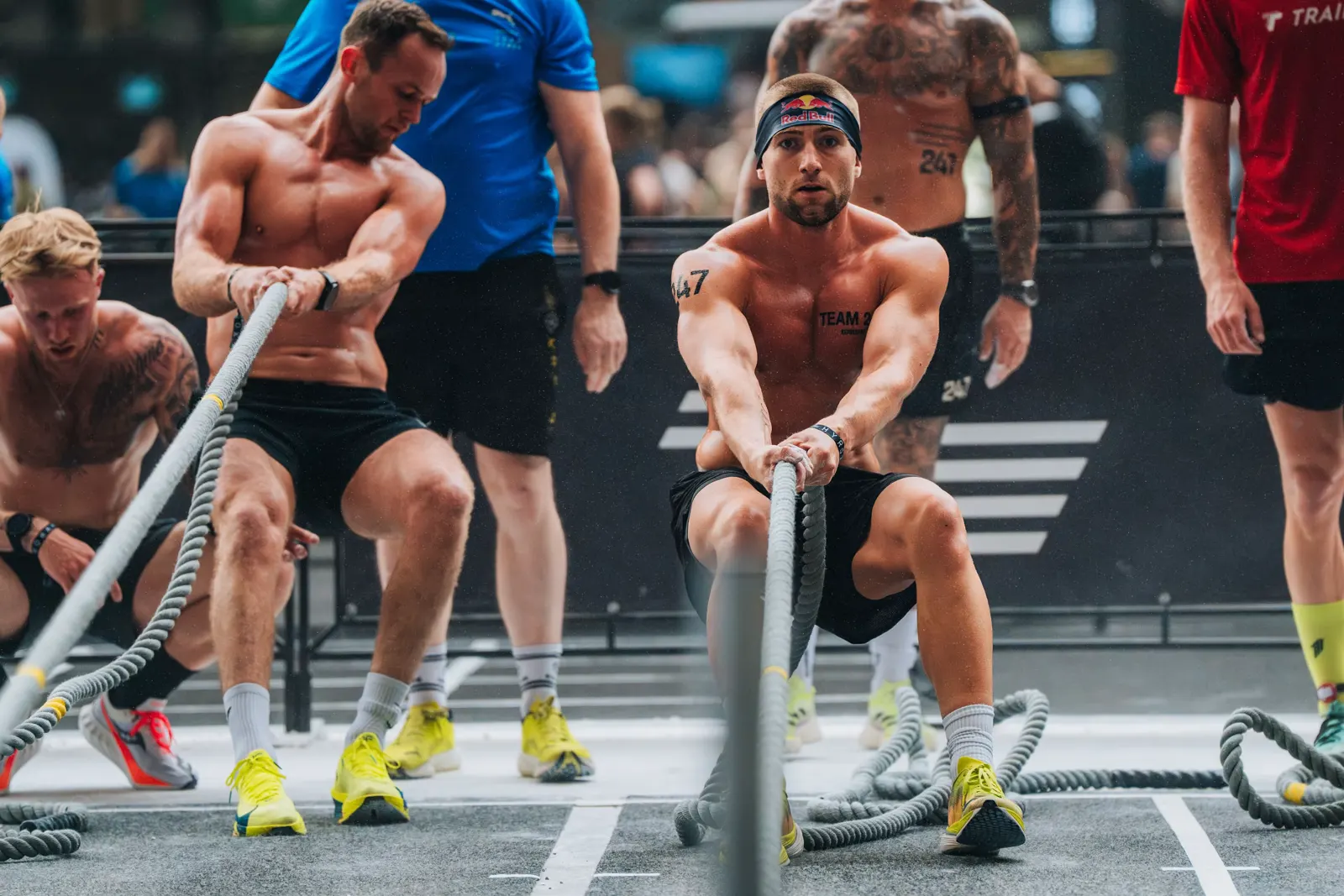
50 m, run as four lengths of 12.5 m, hand over hand from a fixed box.
- Men typical 5:03
- Women typical 5:52
- 6% of the race
Few people practise it, because few gyms have a rope and a sled. A little technique work pays off fast.
Open Men
Top 10%3:46Typical5:03Slowest 10%7:04
Open Women
Top 10%4:29Typical5:52Slowest 10%8:10
Time the top 10% win here 1:17 vs a typical Open Men finisher
Worth training #4 of 8 stations by time to gain · #1 is wall balls
Your number
Where does your split land?
one split doesn't make a race. your worst one usually explains it.
Your sled pull split
Is your sled pull actually slow?
Type the split from your last race or your last full simulation. See where it sits against real racers.
The RoxHype app
Fix the sled pull, then the next one.
A plan weighted toward the splits that are actually costing you time, rebuilt every week.
- Built from your race date and level
- Rebuilt every week from what you did
- Every station, every run, timed in the app
worst split first
Technique: what the fast athletes do
01Get to the end of the rope firstWalk back, take up every centimetre of slack, then start pulling. Athletes who start mid-rope pull the sled half a length and then have to reset.
02Sit into it, hand over handHips back, heels loaded, arms doing the collection and the legs and hips doing the work. A standing, arms-only pull turns into a grip test in about twenty seconds.
03Keep it moving, never let it settleAs with the push, a stopped sled is the most expensive thing on the lane. Aim for a continuous rhythm at 80 per cent rather than sprint-and-stall.
04Feed the rope behind youLet the slack pile behind your hip, not in front of your feet. Stepping on your own rope is a five-second penalty you inflict on yourself.
05Drag it back at a jogReturning the sled to the start line is untimed effort that is still on the clock. Move.
The standard, by division
| Division | Standard |
|---|---|
| Open Men | 103 kg total sled weight |
| Open Women | 78 kg |
| Pro Men | 153 kg |
| Pro Women | 103 kg |
Set by HYROX and they can change between seasons. Check the rulebook on hyrox.com and the judging brief at the venue.
Train it
Sled pull workouts Sessions from the library built around this station. Put it in a plan Your race date in, a week-by-week plan out.
The other seven
Questions people ask
Is a slow sled pull a strength problem or a fitness one?
Arms gave out before your legs? That is technique: sit back into the pull and most of the gap goes in a few sessions. Legs and back held but the sled barely moved? That is strength: heavy rows, deadlifts and loaded pulls.
How do I test which one it is?
Do the station fresh and timed at race weight, then compare it with your race split. Much faster fresh: it is fitness. Slow even fresh: it is strength or technique.
Why does it matter which one it is?
They need different weeks. Strength needs heavy, low-rep work and takes 6 to 12 weeks to show. Fitness needs the movement done tired, after intervals, and shows in 3 to 4 weeks.
How much is the sled pull worth training?
It is about 6% of a typical Open Men race. The top 10% are 1:17 faster here than a typical finisher. That ranks #4 of the 8 stations. #1 is the wall balls (2:15).
Are Pro and Doubles splits published?
Not per station yet. Pro weights are heavier, so expect Pro splits close to the Open typical or a little slower. HYROX sets the weights and can change them between seasons: check hyrox.com before you race.
Which HYROX are you doing?
Tap your race. You get your weeks to go, the finish time to expect, and week 1 of a plan for it. Free.